You've been searching for 4 months. Maybe 6. Maybe longer.
The rejection emails have stopped coming. No rejection at all. Just silence.
Here's what I've learned: that silence isn't random. Your job search stalled because one of three things broke. And you probably know which one.
The Three Reasons Job Searches Stall
Problem 1: Your Resume Doesn't Match What The Market Sees
This one's invisible until it's not.
Your resume looks good to you. Strong titles. Good companies. Clear results. But algorithms don't read resumes the way people do.
They're looking for keywords. Specific words that match the job description. If your resume doesn't have them, you get auto-rejected before a human ever sees it.
This is the clue problem. You have the background, but you're not showing it the way the market understands.
Problem 2: You're Applying Everywhere Instead of Targeting
You've sent 300 applications.
I've seen candidates do this. They apply to every company, every role, every posted job. They think volume is the answer.
It never is.
The difference between someone who lands an offer in month 2 and someone who's still searching in month 8 is usually targeting.
Pick 5 companies. Real targets. Places you actually want to work. Then go deep. Research the hiring manager. Understand the pain point. Time your application. Follow up with strategy.
This is the strategy problem. You have the background, but you're spreading yourself too thin.
Problem 3: You Gave Up At Month 5 When Month 6 Is Where Offers Come
This one's hard to talk about because it's about grit.
Most people push for 4–5 months. Then they get tired. The rejections add up. No interviews come through. They either give up or just half-heartedly apply.
That's when most offers come through.
Not because the timing magically changed, but because the people who push through month 5 have refined their approach by then. They've figured out what works. They've built relationships. They know which companies are hiring.
This is the effort problem. You have the background, but you stopped pushing.
Which One Is Yours?
Before you do anything else, figure out which problem you're hitting.
Is your resume getting past the algorithms? (Easy to test: look at your job descriptions. Do you use the same words? Do your top 3 bullets match the role?)
Are you targeting companies or spray-and-praying? (Be honest: could you name your top 5 target companies? Or are you applying to 50?)
Are you actually executing daily? (Follow-ups. Calls. Conversations. Or are you waiting for your resume to work alone?)
What Changed in 52 Days
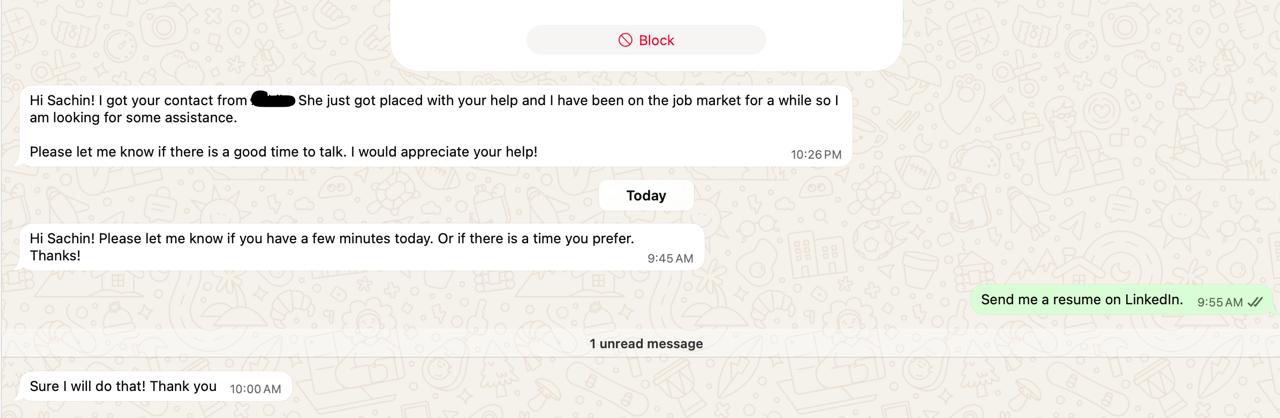
A candidate reached out after 6 months of searching. No offers. No interviews. Just silence.
We looked at their resume. The keywords were missing. We rebuilt it.
We looked at their target list. They had 200 companies. We narrowed it to 5.
We looked at their effort. They were applying once a week. We made it daily.
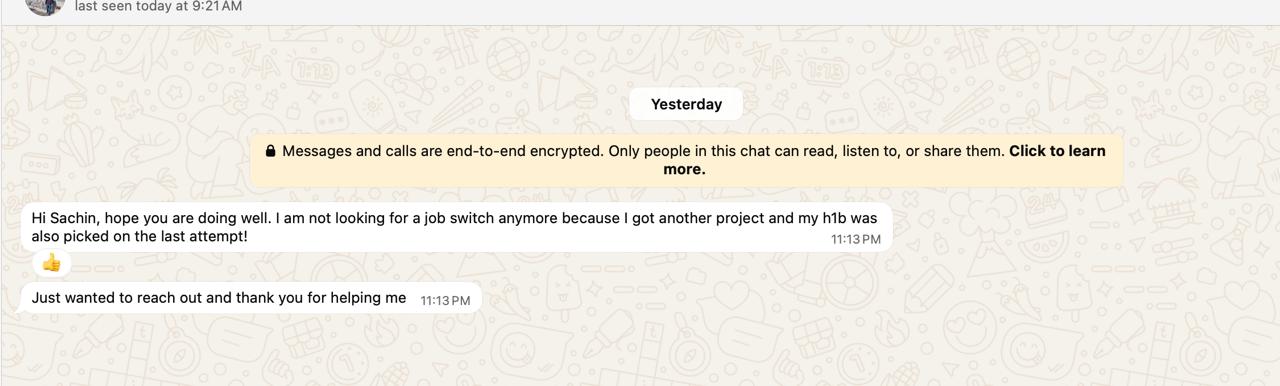
52 days later, offer in hand. Visa approved.
Same candidate. Same background. Same market. Only the approach changed.
Here's The Thing
Your job search didn't stall because you're not good enough. It stalled because one of these three things broke.
Once you know which one, it's fixable.
FAQs
1: What if all three things are broken?
Then you start with the one that will unlock the fastest progress.
Usually it's resume. If your resume isn't passing the algorithm, you'll never get interviews no matter how good your strategy or effort is. Fix that first (2–3 weeks).
Then strategy. Pick your 5 companies, do the research, build the outreach sequence (1–2 weeks).
Then execute on effort. Daily. No breaks (ongoing).
Don't try to fix all three at once. You'll get overwhelmed and do none of them well.
2: I've been searching for 12 months. Is it too late?
No. But you need to understand why it took 12 months.
Most people who've been searching that long have been doing one thing wrong for the entire 12 months. They've been repeating the same mistake over and over.
Maybe their resume has never been optimized. Maybe they've been applying to 300 companies instead of 5. Maybe they've been ghosting after the application instead of following up.
The good news: once you identify which one, fixing it usually moves you fast. We've seen candidates shift from 12 months to an offer in 6 weeks after fixing the bottleneck.
3: What if I do all three and still nothing happens?
If you've genuinely optimized your resume, targeted real companies with research, and executed daily for 30 days with no interviews, then something else is broken.
Usually it's one of these:
Your target list is wrong. You're targeting companies that don't hire people like you. Research better.
Your outreach is weak. You're applying through the website instead of finding the hiring manager's email and reaching out directly.
Your interview skills need work. You're getting interviews but not converting them. That's a different problem (mock interviews, practice, coaching).
You're not being specific enough. You're going for "software engineer" when you should be going for "backend engineer at fintech companies." Specificity matters.
Once you identify which of these is the issue, you have a clear path forward.
Final Word
If you know your bottleneck but aren't sure how to fix it, or if you've tried these steps and nothing's moving, there's one thing worth trying: talking to someone who's done this with hundreds of other candidates.
That's what we do at Wynisco.
We look at your resume, your target list, your effort level, and we tell you exactly which one is broken and how to fix it.
If you want that conversation, reach out: sachin@wynisco.com
Written by
Sachin Rajgire